

How to Stay Safe Driving This Fall in Oklahoma
Summer driving in Oklahoma has a recognizable profile: long days, dry roads, and predictable traffic patterns. Fall changes all of that within a matter of weeks. By October, Green Country drivers are navigating a significantly different risk environment than the one they drove through in August, and many of them have not adjusted their habits to match.
Autumn crashes rise sharply against summer traffic, and the combination of seasonal hazards that makes fall driving uniquely dangerous in Oklahoma is worth understanding specifically rather than generically. At Tulsa Accident Care Center, we see the clinical consequences of fall driving crashes every October through December. Here is what Green Country drivers need to know.
Table of Contents
- Hazard 1: Peak Deer Activity Can Trigger Multi-Vehicle Collisions
- Hazard 2: Wet Leaves Create Traction Conditions Similar to Ice
- Hazard 3: Earlier Darkness Arrives Faster Than Drivers Expect
- Hazard 4: Morning Fog on Oklahoma’s Low-Lying Corridors
- Hazard 5: Sun Glare at Low Angles During Commute Windows
- If You Are Involved in a Fall Crash in Green Country
Hazard 1: Peak Deer Activity Can Trigger Multi-Vehicle Collisions
Oklahoma drivers have a 1-in-126 chance of hitting an animal on the road, slightly above the national average of 1-in-139, according to State Farm’s annual study. That risk rises during the fall. Nearly half of all deer-vehicle collisions in the United States occur between October and December, driven by deer mating season, when animals travel greater distances and cross roads unpredictably.
The danger extends beyond a collision with an animal. A driver who brakes suddenly or swerves to avoid wildlife can trigger a rear-end crash, enter oncoming traffic, or collide with a vehicle in an adjacent lane. In heavier traffic, one unexpected deer crossing can set off a chain reaction involving multiple vehicles.
For Green Country drivers, rural and semi-rural stretches of Highway 75, US-412 west of Sand Springs, Highway 97 between Sand Springs and Sapulpa, Highway 169 north of Owasso, and Highways 51 and 66 through Rogers and Creek counties warrant extra attention. Dawn and dusk are especially important times to watch for wildlife, although deer can enter roadways at any hour. Yellow diamond deer crossing signs mark areas where drivers should remain particularly alert.
If a deer enters the roadway ahead of you, brake firmly while maintaining control and staying in your lane. Swerving can put you in the path of another vehicle or send you off the roadway, creating the potential for a head-on collision or rollover. Reduce your speed where visibility is limited, leave extra following distance, and remember that when one deer crosses, others may follow. Giving yourself—and the drivers around you—more time to react can help prevent one wildlife encounter from becoming a multi-vehicle crash.
Injured in a Fall Crash? Same-Day Care Is Available.
TACC provides specialized post-accident evaluation and treatment across Green Country. No upfront out-of-pocket costs (NAF). Walk-ins welcome.
Hazard 2: Wet Leaves Create Traction Conditions Similar to Ice
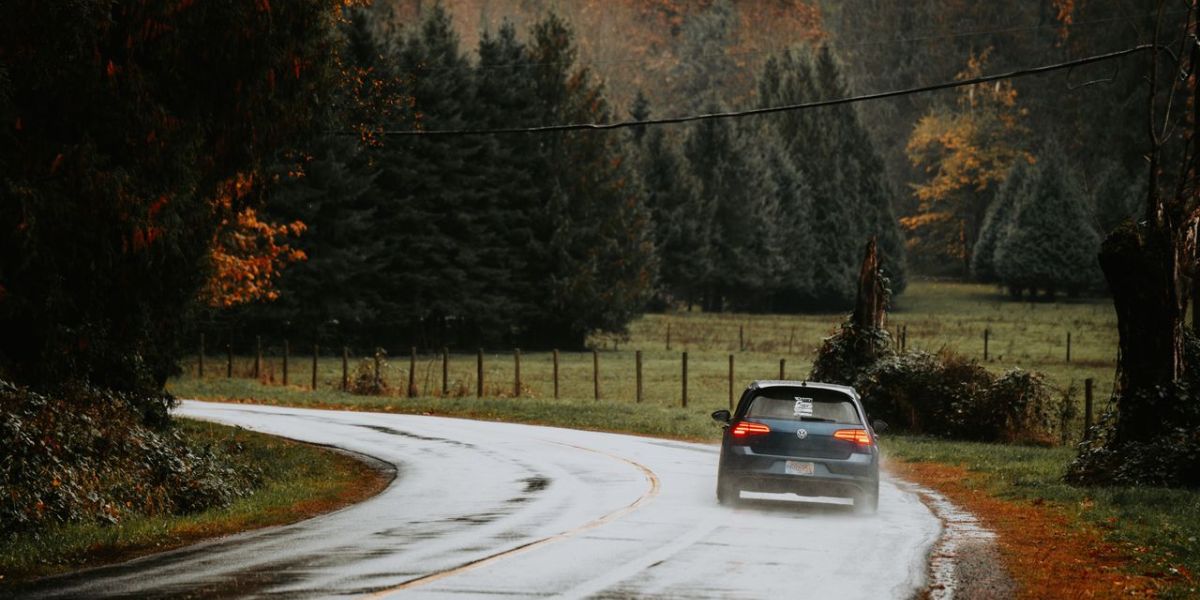
AAA has compared the traction loss from wet leaves on pavement to that of ice. Leaf litter accumulates on road surfaces, particularly on shaded residential streets, beneath overpasses, and on the rural corridors where tree canopy extends over the pavement. When wet, leaves reduce tire grip dramatically and hide lane markings, road edge indicators, and surface irregularities beneath them.
The crash types that wet leaves most commonly contribute to are rear-end collisions from extended stopping distances and single-vehicle accidents from loss of traction in curves. Both are exactly the crash patterns most likely to produce the soft tissue injuries, whiplash, and back injuries that TACC treats most frequently. Reduce speed before reaching leaf-covered pavement and avoid hard braking or sudden steering inputs once on it.
Hazard 3: Earlier Darkness Arrives Faster Than Drivers Expect
The shift from daylight saving time occurs on the first Sunday of November in Oklahoma. In the weeks leading up to and following that shift, the 5 o’clock commute transitions from daylight to darkness with a speed that catches many drivers unprepared. Darkness affects depth perception, color recognition, and peripheral vision in ways that require meaningful adjustments to driving habits.
Research consistently shows that crash risk increases substantially after dark, even though nighttime driving accounts for only a fraction of total travel time. For Green Country commuters on Highway 169, US-169, the Creek Turnpike, and the arterial roads connecting Sand Springs, Owasso, Broken Arrow, and Tulsa, the October and November transition to earlier sunsets means that routes driven comfortably in daylight for months suddenly require more attention, slower speeds, and greater following distances.
As our blog Why Speeding Makes Wrecks Worse: Local Data Insights documents, every additional mile per hour of speed at the moment of impact multiplies crash force and injury severity. The reduced visibility of fall evening driving makes this relationship more consequential, not less.
Hazard 4: Morning Fog on Oklahoma's Low-Lying Corridors
Oklahoma’s river valleys and low-lying corridors are prone to dense ground fog during fall temperature transitions, particularly in the early morning hours when overnight cooling meets residual surface warmth. For drivers on the Arkansas River corridor through Sand Springs, the Verdigris River valley near Catoosa and Claremore, and the lower sections of US-64 through Creek County, morning fog can reduce visibility to a fraction of what is available at midday on the same route.
Fog-related crashes are particularly serious because the reduced visibility that causes them also reduces the ability of other drivers to react to them. A crash that occurs in dense fog creates an elevated secondary collision risk from following traffic that cannot see the stopped vehicles until they are dangerously close. If you encounter fog dense enough to reduce visibility significantly, slow down, use low beam headlights rather than high beams, and increase following distance substantially.
Hazard 5: Sun Glare at Low Angles During Commute Windows
In fall, the sun sits lower in the sky throughout the day, producing a glare angle that intersects directly with driver sightlines during morning and evening commutes. On east-west corridors including US-412, Highway 66, and sections of the Broken Arrow Expressway, sunrise and sunset glare can temporarily reduce forward visibility to near zero even with a clean windshield and properly deployed sun visor.
Sun glare is a contributing factor in a significant number of intersection crashes and rear-end collisions during the fall commute windows. Keeping the windshield clean inside and out, replacing worn wiper blades before the fall season, and allowing extra stopping distance on east-west routes during sunrise and sunset are practical adjustments that reduce this risk meaningfully.
If You Are Involved in a Fall Crash in Green Country
The injuries most seen at TACC following fall crashes follow many of the crash patterns described above. Rear-end collisions from extended stopping distances on wet leaves or fog-reduced visibility produce cervical strain and whiplash. Deer-vehicle collisions often result in collisions with other vehicles and can produce high-force frontal impacts with complex injury patterns.
Regardless of the crash type, the guidance is the same: seek a specialized evaluation promptly, even if you feel relatively okay at the scene. As our blog Understanding Hidden Injuries: Why You Don’t Feel Pain Right Away explains, adrenaline and delayed inflammation mean that feeling fine immediately after a crash is not a reliable indicator of injury.
Call or text 918-888-8080 or book online at tulsaaccidentcare.com.
Pain stops here.
Fall Crash on a Green Country Road?
Same-day appointments at TACC Sand Springs, Tulsa, Broken Arrow, and Owasso. No upfront out-of-pocket costs (NAF). Walk-ins welcome.
Related Reading
- Why Speeding Makes Wrecks Worse: Local Data Insights: Oklahoma crash data and the physics of speed-related injury severity.
- Rear-End Collisions: Why They Are More Serious Than They Look: The most common crash type from wet leaves and fog-reduced stopping distances.
- Understanding Hidden Injuries: Why You Don’t Feel Pain Right Away: Why feeling okay after a fall crash is not a reliable injury indicator.
- Whiplash After a Car Accident: Symptoms, Timeline, and What to Expect: What to expect from the most common fall crash injury.
- What to Do in the First 24 Hours After a Wreck: Step-by-step guidance for the critical window after a fall collision.
- Insurance After an Accident in Oklahoma: How your coverage works and what to do first after a crash.