

2026 Green Country Car Accident Report: What We Learned This Year
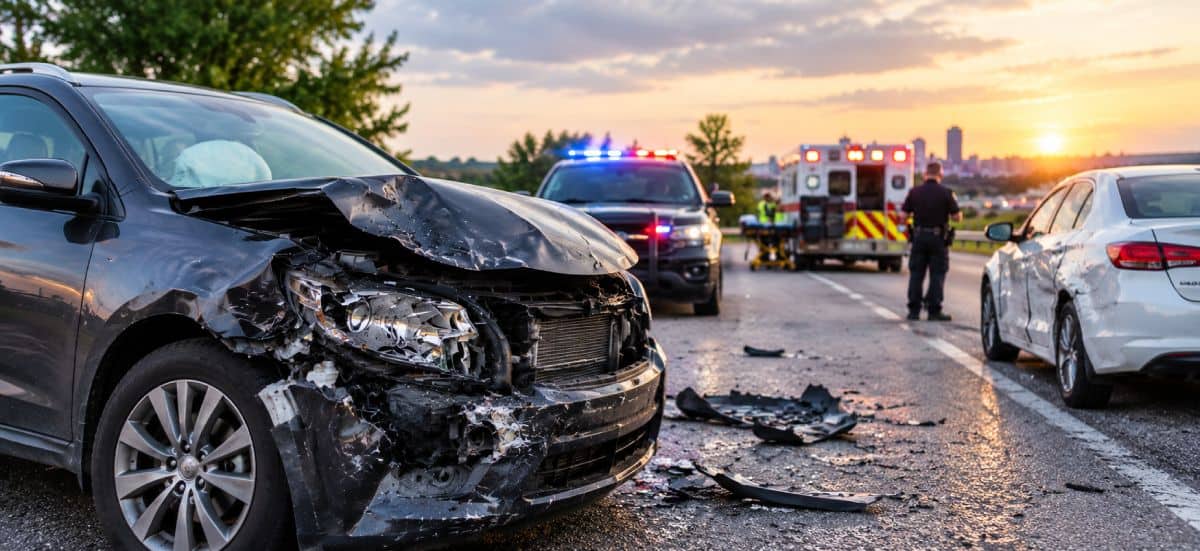
Every year at Tulsa Accident Care Center, hundreds of patients walk through our doors following motor vehicle accidents across Green Country. They come from Sand Springs and West Tulsa, from Owasso and Broken Arrow, from the rural corridors connecting the Tulsa metro to Creek, Rogers, and Osage counties. Their injuries tell a story about how and where people are getting hurt on our roads, what care makes a difference, and where we as a community still have work to do.
This is TACC’s second annual Green Country Car Accident Report, building on the foundation of the 2025 Green Country Car Accident Report with updated clinical observations, new corridor data, and the expanded perspective that comes from a full network of four locations now serving the western, central, eastern, and northern Tulsa metro. Here is what 2026 taught us.
What Changed in 2026: The Sand Springs Opening
The most significant operational development of 2026 was the opening of TACC Sand Springs at 514 Plaza Court in May 2026, bringing our network to four locations across Green Country. The Sand Springs opening closed a significant gap in the western Tulsa corridor, where patients in Sand Springs, Prattville, West Tulsa, Berryhill, Mannford, and Sapulpa had previously faced a 20-plus minute drive into Tulsa for the specialized accident care TACC provides.
The clinical need in this corridor was immediately evident. Patients from the western corridor began presenting within the first weeks of the opening with injury patterns consistent with the high-volume traffic on US-412 and Highway 97, the two corridors we analyzed in detail in our blog Car Accidents on US-412 and Highway 97: What Sand Springs Drivers Need to Know. Rear-end collisions from the US-412 expressway and intersection crashes from the Highway 97 commercial corridor dominated the early Sand Springs caseload, consistent with what we observe at our other locations on comparable road types.
Start 2027 Right. Get Evaluated If You Have Not Already.
If you were in a crash in 2026 and delayed care, it is not too late. Same-day appointments. No upfront out-of-pocket costs (NAF).
The Crash Patterns We Saw Most in 2026
Rear-end collisions remained the dominant presentation across all locations.
For the second consecutive year, rear-end collision patients represented the largest single category of new patient presentations across all TACC locations. The biomechanics of these crashes produce the whiplash and cervical spine injury patterns that define the majority of post-accident care needs, and the year’s data reinforced that this pattern shows no sign of changing. Our dedicated blog Rear-End Collisions: Why They Are More Serious Than They Look documents both the injury mechanism and why patients consistently underestimate these crashes based on vehicle damage alone.Concussion remained the most consistently missed injury.
For the second year running, concussion was the injury category most frequently identified at TACC that had been missed by a prior evaluation, typically an ER or urgent care visit. Patients presenting with post-crash headache, cognitive fog, sleep disruption, and light sensitivity had often already been told their imaging was normal and their injuries were minor. Our SWAY-based objective concussion testing identified clinically significant concussions in these patients and placed them on appropriate management protocols. The 2025 report identified this same pattern, and the 2026 data confirms it is a persistent, systemic gap in non-specialist post-accident care.Delayed care timelines showed slight improvement but remain a significant problem.
One of the consistent findings in the 2025 report was the prevalence of delayed care, patients presenting days or weeks after a crash after attempting to manage symptoms at home. The 2026 data shows a modest improvement in average time-to-treatment among patients who were referred to TACC by a personal injury attorney or another healthcare provider, suggesting that professional referral networks are helping close the delay gap. However, self-referral patients still showed significant delays, reinforcing the importance of patient education around the clinical and legal consequences of delayed care documented in our blog What Happens If You Don’t Treat a Car Accident Injury in Oklahoma.Teen patients showed the highest rate of missed concussions.
Building on the data trend noted in the 2025 report, teen patients continued in 2026 to show the highest rate of concussion presentations that had been missed in prior evaluations. This reflects both the tendency of teens to underreport symptoms and the lower sensitivity of standard clinical assessments compared to SWAY-based objective testing. Our blog How TACC Helps Teens Recover After Accidents covers the full clinical picture of why teens require a different evaluation approach.Older adult patients showed the longest recovery timelines.
Patients over 65 consistently required longer recovery courses than younger patients with comparable injury severity scores, consistent with the age-related physiological differences we document in Car Accident Recovery for Older Adults: What Changes and Why. This population also faced the highest rate of insurance documentation disputes, with carriers frequently attempting to attribute injury findings to pre-existing conditions rather than the crash event.The Questions Green Country Patients Asked Most in 2026
The content we published throughout 2026 was built directly from the questions our patients asked most frequently. The pattern of those questions tells us what Green Country drivers most need to understand about crashes, recovery, and their rights:
- How long will my recovery take? Addressed in How Long Does Recovery Take After a Car Accident?.
- Do I need a lawyer? Addressed in Should You Get a Lawyer After a Car Accident in Oklahoma?.
- Who pays for my care? Addressed in No Out-of-Pocket Costs After a Car Accident: How It Works at TACC and PIP Insurance in Oklahoma.
- Can I go back to work? Addressed in Should You Return to Work After a Car Accident?.
- Is my whiplash serious? Addressed in Whiplash After a Car Accident: Symptoms, Timeline, and What to Expect.
What We Are Taking Into 2027
Continued deepening of the Sand Springs community presence.
The Sand Springs clinic completed its first full operating season in 2026 and established a clear patient base in the western corridor. In 2027, our goal is to deepen those community relationships through educational outreach, local partnerships, and continued content that serves drivers in Sand Springs, Prattville, Mannford, Sapulpa, and the broader western Tulsa area.Expanded focus on documentation quality and patient education.
The pattern of missed diagnoses, insurance documentation disputes, and patient confusion about coverage and legal rights that we observed in 2026 reflects a persistent gap in public awareness. Our new blog How TACC’s Documentation Protects Your Insurance Claim and Legal Case After a Crash addresses this directly, and closing this awareness gap remains one of our highest content priorities heading into 2027.The same clinical commitment that earned 600 plus five-star reviews.
The model that built TACC’s reputation across Green Country does not change in 2027. Same-day access, no upfront out-of-pocket costs, everything under one roof, and providers who specialize exclusively in post-accident recovery. That commitment carries forward into every patient we see in the year ahead.A Final Note for Patients Still Carrying 2026 Injuries
If you were in a car accident in 2026 and have not yet been fully evaluated or treated, it is not too late. Our clinical team regularly sees patients who present weeks or months after a crash with injuries that were not properly identified or treated in the immediate aftermath. Earlier is always better. But proper care now is always better than no care at all.
Call or text 918-888-8080 or visit tulsaaccidentcare.com to book your evaluation. Same-day appointments available across all Green Country locations. No upfront out-of-pocket costs (NAF). Walk-ins welcome.
Pain stops here.
Carrying Unresolved Injuries From 2026 Into 2027?
Related Reading
- 2025 Green Country Car Accident Report — The first annual report in this series, covering 2025 crash patterns and clinical trends.
- Rear-End Collisions: Why They Are More Serious Than They Look — The dominant crash pattern across Green Country in both 2025 and 2026.
- Concussion After a Car Accident: What You Need to Know — Why concussion remains the most missed injury in post-accident care.
- Car Accident Recovery for Older Adults: What Changes and Why — Why older adults showed the longest recovery timelines in 2026.
- How TACC’s Documentation Protects Your Insurance Claim and Legal Case — The documentation standard that protects patients through the claims process.
- Tulsa Accident Care Center Is Now Open in Sand Springs — The biggest TACC development of 2026.
Tulsa Accident Care Center is Green Country’s trusted leader in auto accident recovery. Designed exclusively for motor vehicle accident victims, TACC offers a team of licensed physicians, advanced practice providers, and neuropsychologists to ensure complete, specialized, and comprehensive care with no upfront out-of-pocket costs (NAF). With multiple locations and more than 600 five-star reviews, TACC is Green Country’s partner from impact to recovery.