

How to Manage Pain After a Car Accident Without Overusing Medication
Pain is the most immediate and most disruptive consequence of a car accident injury. It affects sleep, work capacity, mood, and the ability to perform the most basic daily activities. Managing it effectively is not just a quality-of-life issue; it’s a clinical priority, because unmanaged pain drives muscle guarding, movement avoidance, and sleep disruption that collectively slows recovery and increases the risk of chronic pain.
At Tulsa Accident Care Center, pain management is an integrated component of every patient’s recovery plan, not a standalone prescription handed out at discharge. This blog explains how crash-related pain is best managed across the recovery timeline and why relying on medication alone, without addressing the underlying injury patterns, is one of the most common mistakes that leads to prolonged suffering after a crash.
Why Post-Accident Pain Is Different From Ordinary Pain
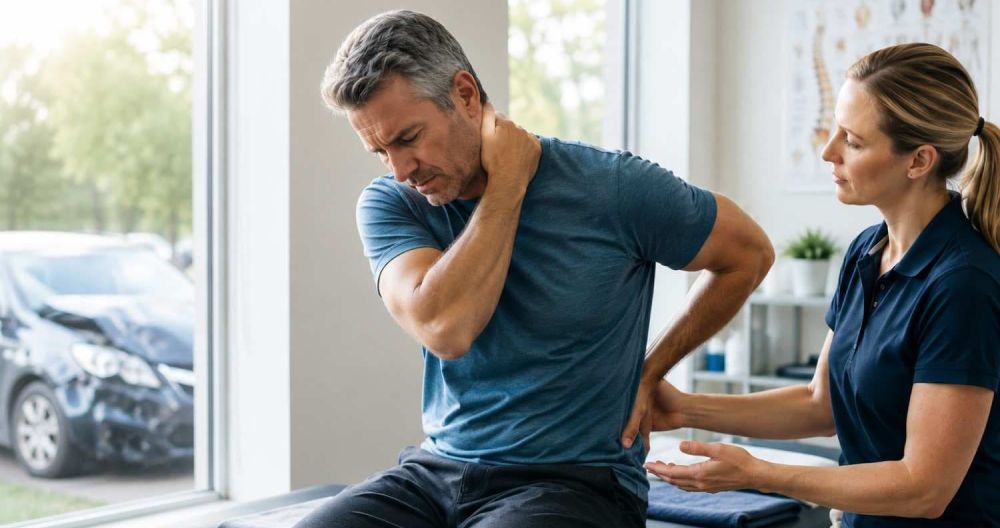
The pain that follows a motor vehicle accident differs from most other pain experiences in clinically important ways. First, it’s frequently multi-regional rather than localized: a rear-end collision that strains the cervical spine often produces concurrent pain in the shoulders, mid-back, and lower back simultaneously. Second, it follows a delayed and escalating timeline: adrenaline in the acute period masks the full extent of pain, which then intensifies over the following 24 to 72 hours as inflammation builds. Third, it’s often produced by several different injury mechanisms occurring simultaneously, including soft tissue injury, joint dysfunction, nerve irritation, and muscular guarding, each of which responds better to different treatment modalities than to medication alone.
As our blog Understanding Hidden Injuries: Why You Don’t Feel Pain Right Away explains, patients who attempt to self-assess their pain in the immediate post-crash period and conclude it is manageable often find themselves significantly more symptomatic by day two or three. By that point, the pain is driving behavior patterns, including reduced movement and disrupted sleep, that actively slow the healing process.
Pain After a Crash? There Is a Better Path Than Waiting It Out.
The Role of Medication in Post-Accident Pain Management
Medication has an important and appropriate role in post-accident pain management, particularly in the acute phase when inflammation is at its peak and pain is most severe. Anti-inflammatory medications reduce the inflammatory cascade that drives early post-crash pain. Muscle relaxants address the protective muscle spasm that, while initially a useful stabilizing response, quickly becomes a source of secondary pain and restricted movement if not managed. Short-term analgesics provide pain reduction that makes it possible to begin the therapeutic movement and physical therapy that actually drive recovery.
At TACC, we have on-site medication management available through our licensed providers and on-site pharmacy resources. When medication is indicated as part of a patient’s care plan, it is prescribed and managed within the context of the overall treatment protocol rather than as a standalone intervention.
The critical distinction is between using medication to manage pain well enough to engage productively with treatment and using medication as a substitute for treatment. The former is clinically appropriate and well-supported. The latter is one of the most reliable pathways to chronic pain following a crash, because it suppresses symptoms without addressing the underlying injury mechanisms that are producing them.
Non-Pharmacological Pain Management: What TACC Uses and Why
Physical Therapy
Physical therapy is the primary non-pharmacological pain management tool in post-accident recovery and the one with the strongest evidence base. Structured therapeutic exercise, manual therapy, and targeted mobilization address the biomechanical and neuromuscular sources of post-crash pain directly, reducing pain by restoring normal movement patterns rather than simply suppressing pain signals. One of the counterintuitive aspects of physical therapy for crash patients is that it can begin producing pain relief earlier than patients expect, even in the acute phase, because therapeutic movement reduces muscle guarding and promotes circulation in injured tissue. Patients who avoid all movement in the days following a crash, fearing that movement will worsen their injury, often find that guided therapeutic movement produces more relief than rest alone.Osteopathic Manipulative Therapy
As we explain in detail in What Is Osteopathic Manipulative Therapy and How Does It Help After a Car Accident?, OMT addresses the joint dysfunction and fascial restrictions that are primary sources of pain in the post-crash period. By restoring normal joint mobility and releasing tissue restrictions directly, OMT can reduce pain with a level of specificity that systemic medication cannot match for musculoskeletal pain sources.Ultrasound Therapy and Phonophoresis
Therapeutic ultrasound uses soundwave energy to penetrate deep tissue, promoting blood flow, reducing inflammation, and accelerating healing in injured muscles, tendons, and ligaments. Phonophoresis combines ultrasound with topical anti-inflammatory medication, delivering it through the skin directly into injured tissue for targeted effect. Both modalities address pain at its source in ways that oral medication cannot reach as specifically.Electrical Muscle Stimulation
Electrical muscle stimulation uses controlled electrical current to stimulate muscle contractions, reduce pain and spasm, and support neuromuscular re-education in patients recovering from crash-related injuries. It is particularly effective for addressing the muscle guarding that perpetuates pain beyond the acute inflammatory phase and can provide meaningful pain relief between physical therapy sessions.SWAY Testing and Concussion Management
For patients whose pain includes headache, cognitive fog, or sensitivity to light and sound, accurate concussion assessment is a critical component of pain management. Concussion headaches and cervicogenic headaches have different origins and respond to different treatments. Managing headache pain without first establishing whether a concussion is present risks applying the wrong treatment approach, potentially prolonging the headache and delaying concussion-specific management that could resolve it.The Pain-Sleep Cycle and Why Breaking It Matters
One of the most clinically significant dimensions of post-accident pain management is the relationship between pain and sleep. Pain disrupts sleep. Sleep disruption reduces pain tolerance and healing rates. Reduced healing rates produce prolonged pain. This cycle is one of the most consistent contributors to chronic pain outcomes following crash injuries, and breaking it early is a specific treatment priority at TACC.
Addressing this cycle requires managing pain well enough in the evening to allow restorative sleep, without relying on sedating medications that reduce sleep quality even while producing sedation. Our providers address this through appropriate short-term pain management in the acute phase combined with activity pacing guidance that reduces pain at bedtime, and sleep hygiene recommendations specific to the post-trauma period.
How Premature Medication Reduction Can Set Recovery Back
A pattern we see regularly at TACC involves patients who begin reducing their prescribed medication as soon as they feel somewhat better, typically in the second or third week of recovery when acute inflammation has subsided enough to make pain more manageable. This decision, though understandable, often results in a return of more severe pain as the underlying injury mechanisms, no longer suppressed, reassert themselves at a time when the patient has also reduced their engagement with therapy.
The correct approach is to taper medication in coordination with your treating provider, as your progress in therapy demonstrates that the structural sources of your pain are being addressed. Pain reduction should be driven by healing, not by medication removal, and the two should happen in a coordinated sequence rather than independently.
This is one of the reasons completing your full course of care at TACC is clinically important. As our blog 3 Mistakes Drivers Make After a Wreck explains, stopping treatment prematurely because you feel better is one of the most reliable ways to convert an acute crash injury into a chronic pain condition.
Same-day appointments are available at TACC Sand Springs, Tulsa, Broken Arrow, and Owasso. No upfront out-of-pocket costs (NAF). Walk-ins welcome. Call or text 918-888-8080.
Pain stops here.
Managing Post-Crash Pain and Not Seeing Progress?
Related Reading
- Whiplash After a Car Accident: Symptoms, Timeline, and What to Expect: How the most common crash pain pattern evolves across the recovery timeline.
- What Is Osteopathic Manipulative Therapy and How Does It Help After a Car Accident?: How OMT addresses the structural sources of post-crash pain.
- How Long Does Recovery Take After a Car Accident?: Recovery timelines and what to expect at each phase of pain management.
- Managing Soft-Tissue Injuries After a Car Accident: The injury sources behind most post-accident pain and how they are treated.
- Concussion After a Car Accident: What You Need to Know: Why headache management requires concussion assessment before treatment.
- 3 Mistakes Drivers Make After a Wreck: Including stopping treatment too soon, the most common pain management mistake.